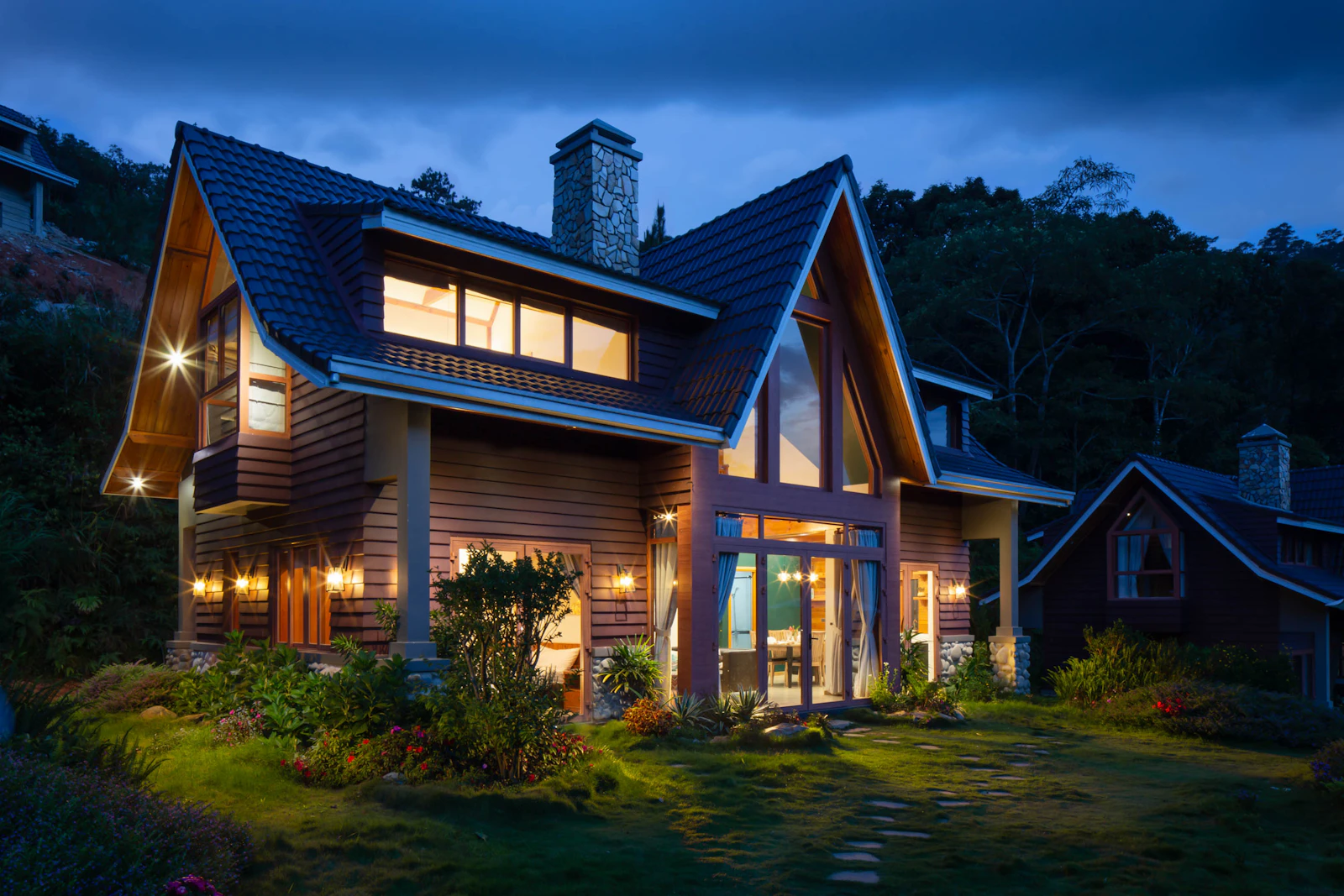
Anna made national lists this year as one of the fastest-growing cities in the country, and the reason is visible from almost any road heading out of the old town center: fields turning into framed houses, and framed houses turning into cul-de-sacs, faster than the street signs can keep up. The U.S. Census Bureau put Anna’s population at 35,245 in a 2025 estimate, up from fewer than 17,000 at the 2020 count. Nearly all of that arrived as new construction.
That makes Anna an unusually builder-driven market. If you are shopping here, you are mostly choosing among master-planned communities and active subdivisions rather than resale homes on established blocks. Below is a grounded look at the real communities going up, who is building them, and the one piece of the math that catches almost every new arrival off guard.
The three big master-planned communities
Villages of Hurricane Creek is the flagship. It sits off the U.S. 75 and FM 455 area and is the largest planned community anchoring Anna’s growth. The plan calls for 984-plus single-family homes plus roughly 400 multi-family units, along with garden homes and townhomes — a deliberate mix of price points rather than a single product type. Centurion American is the developer, and the confirmed builders include Bloomfield Homes, First Texas Homes, and D.R. Horton on the townhome side. What sets Hurricane Creek apart is that it is planned as a place, not just a subdivision: a future on-site elementary school, a fire station, and more than 50,000 square feet of retail and dining are part of the plan, and it is slated to bring Anna its first hotel.
Anna Town Square is the amenity-forward option. Spread across roughly 600 acres near U.S. 75, it is planned for about 2,000 homes on a range of lot sizes, with around 100 acres set aside for mixed-use development. The Skorburg Company is the developer, and builders include Pulte Homes. The draw here is the shared amenities: a roughly 28-acre regional city park, a resort-style pool and amenity center, and an on-site elementary school. If your priority is a community pool and a big park within the neighborhood itself, this is the profile to look at.
Sherley Farms is the newest and most ambitious of the three, and the one to watch if you are planning a purchase a year or two out. It is a $1.5 billion, 970-plus-acre wellness-focused community about five minutes from U.S. 75 near downtown, planned for roughly 3,000 homes and organized around an unusual anchor: a 65-acre working organic farm. The developer is the Tellus Group, and the builder lineup is deep — Bloomfield, DRB, Drees, Highland, Homebound, Olivia Clarke, and Perry among them. Sherley Farms broke ground on March 25, 2026, with the first model homes expected in spring 2027, so this is a community you can plan around rather than move into right now. The name, fittingly, ties back to one of the founding families whose story runs all the way through Anna’s history.
Established and actively building communities
Not everything in Anna is a brand-new mega-development. Bloomfield Homes has active construction in West Crossing, an established Anna community, and in Meadow Vista, another of its Anna neighborhoods. These are worth a look if you want new construction in a community that is already partly built out and lived-in rather than one that is still mostly graded lots.
Other neighborhood names you’ll encounter
Beyond the flagship developments, several other neighborhood names show up across local real-estate listings. Treat these as the labels agents and residents actually use, without reading precise municipal boundaries into them:
- Lakeview Estates, a newer-construction subdivision.
- Pecan Grove, off FM 455, noted for larger lots, mature trees, and — unusually for a growing Texas suburb — no HOA.
- North Pointe Crossing, an established single-family neighborhood known for wide streets and easy U.S. 75 access.
- Capitol Hill, a quieter subdivision northeast of the center with a low-through-traffic layout.
- Oak Hollow of Anna, an established community with its own homeowners association.
The no-HOA detail on Pecan Grove is worth flagging, because it is the exception rather than the rule around here — most new communities in Anna come with an HOA, and that leads directly to the part of the math that trips people up.
The tax and dues line nobody explains up front
Here is the thing a lot of Anna buyers do not price in until they are deep into a contract. Most new master-planned communities in the area carry not just an HOA but also a special taxing district — a MUD (municipal utility district) or a PID (public improvement district) — that exists to repay the bonds that funded the community’s roads, water, and sewer infrastructure. That district shows up as an add-on to your property tax bill.
As a regional rule of thumb, a MUD or PID can add somewhere in the range of roughly 0.5 to 1.5 percent on top of the base tax rate, and in some subdivisions the all-in effective rate can climb past 3 percent. On top of that, new-build buyers here commonly see HOA dues in the neighborhood of 150 to 200 dollars a month. None of that is hidden, exactly — it is all in the community and closing documents — but it is easy to overlook when you are focused on the sticker price and the finish-out options.
The single most important habit for an Anna new-construction buyer is to ask, for the specific home and subdivision you are considering, what the actual tax rate and any MUD or PID assessment are, and what the current HOA dues run. The ranges above are real, but the precise number varies community by community and needs to be pulled from the appraisal district and the community’s own documents before you sign anything. Two homes a mile apart in Anna can carry meaningfully different effective tax rates depending on which district each sits in.
The ground underneath the slab
One more Anna-specific reality worth understanding before you buy new here: the dirt. Anna sits on the Blackland Prairie, the belt of dark, expansive clay that locals call black gumbo. It swells when it is wet and shrinks hard when it is dry, and that shrink-swell movement is the top geotechnical issue across this part of Collin County. It is the reason most new homes here are built on post-tension slabs and the reason foundation watering during a drought summer is a genuine maintenance task, not a superstition. When you tour a new build, it is entirely fair to ask the builder how the slab is engineered for this soil and what the foundation-care guidance is — a good builder will have a clear answer.
Putting it together
For a move you can make now, look hardest at the communities already producing homes — the Bloomfield neighborhoods like West Crossing and Meadow Vista, and the delivering sections of Anna Town Square and Villages of Hurricane Creek. For a purchase you are planning a year or two out, Sherley Farms is the marquee option, with models due in spring 2027. Whichever you choose, get the specific tax rate, MUD or PID assessment, and HOA dues in writing for your exact lot, and ask how the foundation is built for Blackland clay. Do those two things and you will avoid the two surprises that catch the most new Anna homeowners.